Sunday, March 20, 2016

Virtual Choir

Virtual Choir


As I mentioned in a previous post, technology can be used to virtually link classrooms that can create music together. Eric Whitacre, a popular contemporary choral composer and conductor, uses this idea to an extreme. In the following video, Whitacre combined hundreds of video submissions into a final choral piece using voices of people who have never met. Whitacre first recorded a video of himself conducting the piece and musicians recorded themselves singing the song while following his conducting. More information on his projects can be found here.


In urban classrooms, choirs are often very small if they exist at all. This concept allows for individuals or entire choirs to contribute to a larger collaboration created by students around the world. Less advanced choirs have the option of only singing as many parts as they are capable of mastering. With this in mind, many less developed choirs can collaborate by singing different harmonies that can be combined into a final masterpiece.


This project also addresses many common core music standards including performing and analyzing music. For example, students will be recording their performances on youtube. They can then evaluate their performance and use personal and peer feedback to improve their performances.


In general, the purpose of this project is to link musicians of various cultures and abilities together through music. Classrooms all over the world can collaborate and generate feedback for one another. Click here for more resources on using Skype in the classroom. This is especially useful in urban environments where choirs are small and underdeveloped. The technology and collaboration involved will help engage students and get them excited about making music with others.


The opinions expressed here by me (and those providing comments) are mine or theirs alone, and do not reflect the opinions of AUSL, NLU, or any employee thereof. Neither AUSL nor NLU are responsible for the accuracy of any of the information supplied here or in any linked web site.

Tuesday, December 1, 2015

Creating Young Musicians Through Technology

Technology can be used in many ways in the music classroom, but I believe technology most enhances a student’s ability to learn music composition. In the days of Bach, music was hand written and the composer needed to be able to hear what the composition would sound like with all of the instruments. This is a valuable skill, but not accessible for most young musicians. With the use of technology, students will be much more successful at creating their own music.
 
Electroacoustic sounds give students a realistic version of their music. Students can hear how their composition would sound if it were performed live and can make adjustments to their piece based on what they hear. They may find that certain instruments do not sound well together or that the instruments they chose do not represent the emotion that want to audience to experience. Music Sparkles is an app that includes sounds from common and many uncommon instruments. This app can be used to help students experience the sounds of different instruments and learn instrument families. Toca Band is another app that lets kids pick from more than 15 musical characters and "play" them on stage by dragging and dropping them into the spotlights. Scape is another app that lets kids generate ambient music as they combine shapes, colors, and textures onto a blank palette. They can learn that music has different "moods" and explore the tranquil sounds. Garage Band is one of the most popular music composition technologies used by young students. This software allows students to sequence loops with different instruments to create rock songs


Smart Board in Music Class

Using a Smart Board in effectively music class can be challenging, but if used correctly, can enhance student learning. Many music classes that I have observed do not use Smart Boards even when they are given one. Even the most basic functions of the Smart Board can be used by those with little technology experience. At Johnson School of Excellence, we use the Smart Board to play videos with movements for the students to do as a class. This gives the students a "brain break" while also uses movement to emphasize style and steady beat. Students can also view youtube clips of live music performances and talk about the instruments they heard. Click HERE for an example of hour to use a Smart Board in music class.
Smart Boards can be used to promote literacy in the music classroom. Many music teachers teach by rote or out of books with tiny text. A Smart Board allows for this text to be displayed in larger font and can include images and activities to support student learning. Students will be singing the words while also looking at how they are spelled. The instructor can then focus on complex words that use unusual vowel patterns to improve literacy skills. For example, when teaching quarter notes and eighth notes to 3rd graders, a teacher might start by displaying the text and use iconic notation to represent the notes. The students will talk about a complex word in the piece and then sing the song using that word. Smart Boards can present iconic notation that is not normally represented in traditional sheet music. Students can use the touch screen function on the Smart Board to rearrange the iconic notation to form new compositions. The touch screen function makes music class more exciting and engaging for students. More resources on how to use a Smart Board in music class can be found HERE.

Piano Lab


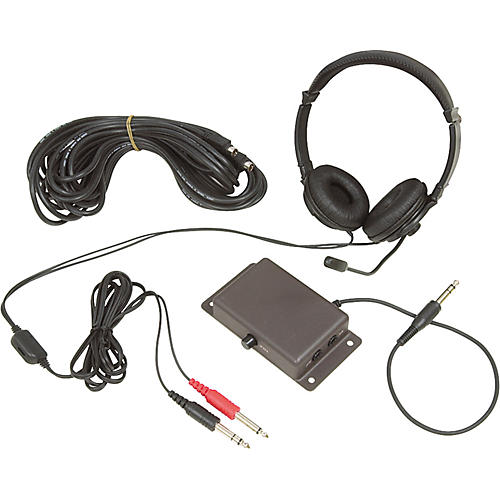
One of the most valuable technologies to have in a music classroom is a piano lab. Piano labs provide several ways to teach large groups of students the fundamentals of music and piano technique. At Johnson School of Excellence, we have 32 electronic keyboards equipped with headphones and microphones. Each keyboard is linked to each other through a complex network of cables and electronic equipment. The instructor has complete control over what each student can hear through their headsets. The student may only be able to hear themselves, the instructor, or a partner they are working with. With this is in mind, the instructor has several options for teaching a lesson. At first, students can play on their own and listen to only their keyboard. The instructor can then channel in to their keyboard and monitor individual progress. Students can then be put into pairs to make a joint project. Students can only hear their partner or the instructor. The instructor can then have individuals or groups do a solo performance. While in solo mode, students cannot hear their own piano making it easier to keep students attention. As a final step, the instructor can link all keyboards for a class performance. Each student can hear every keyboard and practice large group performances. More information how to install and use a piano lab can be found HERE.


While this technology is great for a music classroom, it also takes up allot of space and money. The keyboard lab at Johnson takes up an entire classroom. Especially in urban schools, finding a place to host a lab may be difficult. In addition, piano labs are very costly. Each students needs a keyboard and headset along with thousands of feet of cable to link each piano. The main controllers that each keyboard connects to is also very pricey. Maintaining equipment can also become expensive as electrical and hardware issues are common.


While it may seem that a piano lab is more trouble than it’s worth, the true value of this technology shows when students become more engaged and excited to learn. At Johnson, we are able to use the lab as a behavior management tool as a well as an educational resources. Many of our keyboards were donated or acquired through grants. Click HERE to view several resources for music technology grants. With enough resources, most music classrooms should have access to at least a small computer lab.


Sunday, August 16, 2015

Should Schools Require Computer Science Classes?


       It's not hard to wonder how gaining more computer skills could benefit your career. Computers have impacted just about every field that exists and are continuing to influence our lives more and more each day. Does this mean our students should be required to take more computer courses? Computers are being used more and more in the classroom and advancements have lead to the creation of some very powerful learning tools. The following video shows some of the biggest influences on computers and the internet promoting computer science.
       A career in computers is a reasonable prospect given the ever increasing need for computer scientists. New jobs are created every day for those with training in computer science. However, I think it's also important to note that nearly every job involves computers and increases the effectiveness of the fields they contribute to. For example, during my student teaching at Sheridan Elementary in Bloomington, Illinois, every class was equipped with a smart board. While the instructor knew enough to use the board for a few fun activities, I was able to turn it into a much more powerful learning tool due to my knowledge of computers. THIS website also offers a variety of Smart Board activities.

       Another example of how technology has influenced my career is when I was a teachers aide in a special education classroom. My student was nonverbal and relied sign language to communicate. He also had a touch talker communication device that he and the staff did not know how to use. One of my biggest projects at this school was teaching my student how to use the device and creating pages for him to use for his classes. Teachers must be able to adapt their lessons to a diverse group of learners, and this technology offers a way to do just that. THIS youtube channel contains many tutorial videos and ideas for adapting the device to meet the individual student's needs.

       With limitless benefits, computers should be a part of every student's academic requirements. However, urban schools have much less technology and less access to computers. Students in urban areas are also less likely to encounter computers outside of the classroom. THIS article discusses how while most schools are plunging into technology, urban schools are left behind. If experience with computers is becoming exponentially more important in our society, shouldn't all students have access to technology at school?


The opinions expressed here by me (and those providing comments) are mine or theirs alone, and do not reflect the opinions of AUSL, NLU, or any employee thereof. Neither AUSL nor NLU are responsible for the accuracy of any of the information supplied here or in any linked web site.

Saturday, August 15, 2015

Black History is Bigger Than Slavery


When I think about what I was taught about black history in school, I only remember lessons on slavery and prejudice. While these are significant to our countries history, they have become the default topics when discussing black history. In her article "Black History is Bigger than Slavery," Raluca Albu addresses the issue that schools tend to focus on a few events affiliated with a very rich culture. Students can still learn the standard content presented in history classes while also gaining a better understanding of how other cultures influenced these events. Other cultures are also excluded from many notable events in history giving students a incomplete picture of how other cultures have contributed to the history of the world. When students are given the opportunity to learn the true impact that other cultures have had on our world, they gain a greater appreciation for the diversity they will encounter in their own lives. I agree with Raluca Ablu that out schools should teach about cultures beyond what is required in the current content standards. Her article can be read here.

As Raluca Albu says in her article, "... to give students a fighting chance of living in a more equitable society, we have to change the way we teach them." When students only associate black history with specific events, they often wonder if that was the only contribution that black culture made to history. The National United States History Content Standards for Grades 5-12 treat black history as a separate part of history and fail to incorporate many significant contributions this culture has made to our world. Students often associate black history with the slavery, the Civil war, and the Civil Rights Movement. What about the impact that Crispus Attukus, a black man, had on the American Revolution? When we teach about Ellis Island, do we teach about the black immigrants? To provide students with a well rounded education, we must incorporate aspects of every culture in our lessons. In the following video, Chimamanda Ngozi Adichie discusses how our culture often as a single view of certain cultures.

This sort of "single story" thinking can be seen across all cultures discussed in schools. Specific cultures are associated with a select number of events as if that's the only significant impact they've had on the world. The principals that Raluca Albu is asking teachers to apply to their classrooms can be implemented across all subjects for all cultures. In today's schools , Native Americans were just the people we took land from and the Japanese bombed us in World War II. This gives the impression that our history is primarily driven by white males and only somewhat influenced by minority cultures. However, other cultures have had a significant impact on the history of America and the world. For example, the Great Depression is often filled with stories of the struggles of white people. What about the other immigrants and natives that were present during this time? How can we promote diversity and acceptance in our schools if we only teach about how one race has impacted history?

Providing students with a well-rounded view of other cultures is especially important in today's society. First, it provides students with a greater appreciation for other cultures. Click here for some cultural lessons you can use in your classroom. Students should be immersed in multiple aspects of all cultures they are learning about to gain a greater understanding of the many events, traditions, and customs that have become a part of history. Not only can students learn about the details of a cultures history, but also explore their music, food, and customs. When students realize how rich culture is, they become more accepting of the diverse world we live in. Secondly, students gain a more personal understanding of their own culture and family heritage. When students can make connections to their own lives or the lives of their friends and classmates, they become much more interested and engaged in the subject. Making lessons culturally relevant and captivating is especially important in an urban classroom. Students much greater appreciation for other cultures when they are given a chance to explore how exciting and important other cultures are.

The opinions expressed here by me (and those providing comments) are mine or theirs alone, and do not reflect the opinions of AUSL, NLU, or any employee thereof. Neither AUSL nor NLU are responsible for the accuracy of any of the information supplied here or in any linked web site.

Sunday, August 2, 2015

The Homework Debate

       Many studies are being conducted in an attempt to support the use of homework, but many are failing to do so. Alfie Kohn, author of "The Homework Myth," believes there is no correlation between student achievement and homework in elementary schools. He also believes there is little evidence that homework is necessary in high school and may even decrease a student's interest in learning. While some homework is good, memorizing facts for a quiz or circling words on a page can be virtually meaningless in regards to student learning. There is a notable increase in the amount of homework being given to elementary students. Watch this video to see why Alfie Kohn thinks this is detrimental to achievement in elementary schools.

       
       Homework should focus on quality rather than quantity. Spending countless hours rehearsing information that will be recalled on a future test has little to no value if the content is not useful and engaging. Assignments should make students excited to learn and enhance their learning experience. Many students do not have the resources they need to complete assignments at home. Some students don't have access to a computer or internet while others are from families still learning English. Without the necessary resources needed to work at home, these students are failing benefit from the work they are given. This poll done by debate.org shows that most people agree that homework should be reduced and contains comments from both sides of this argument.

       I remember dreading being assigned homework while I was in school. Not only was it time consuming, I also did not have much support at home. By the time I finished my homework, it was well passed my bedtime and I began to suffer from sleep deprivation. I was already capable of demonstrating what I had learned in class, but this began to change when I was too tired to focus in school. Too much time was spent drilling concepts I already knew while I failed to see the importance of what I was learning and lost interest in school. Some of my homework included teaching myself to perform mathematical calculations we had yet to cover in class. Our teacher believed reading the textbook was enough to grasp the concept that we would have to demonstrate on our homework that night. Often times, my parents were unable to help me and I failed many homework assignments. The work I did in class propelled my understanding, but the homework I was given often told a different story. My homework grades where low but my performance on tests was far beyond that of my classmates. Despite my excellent test scores, I was labeled as an average student because of the homework I was given.


       Alfie Kohn compares homework to weather; We believe homework is just a part of life that we cannot change. However, the more research that is done and made known to other teachers the better chance we have to make effective change in our schools. When homework is assigned, it should be meaningful and worth the time the student will put in. With so many studies supporting the uselessness of homework, we as educators must consider whether the work we assign outside of class benefits our students. Click here for some strategies regarding homework.

The opinions expressed here by me (and those providing comments) are mine or theirs alone, and do not reflect the opinions of AUSL, NLU, or any employee thereof. Neither AUSL nor NLU are responsible for the accuracy of any of the information supplied here or in any linked web site.